Warning: Undefined array key "current_expo" in /var/www/clients/client3/web4/web/wp-content/themes/artaucentre/loop/vitrine.php on line 25
On « Sexy Magico »
#18
Louis Gahide
424107 Rue de la Cathédrale
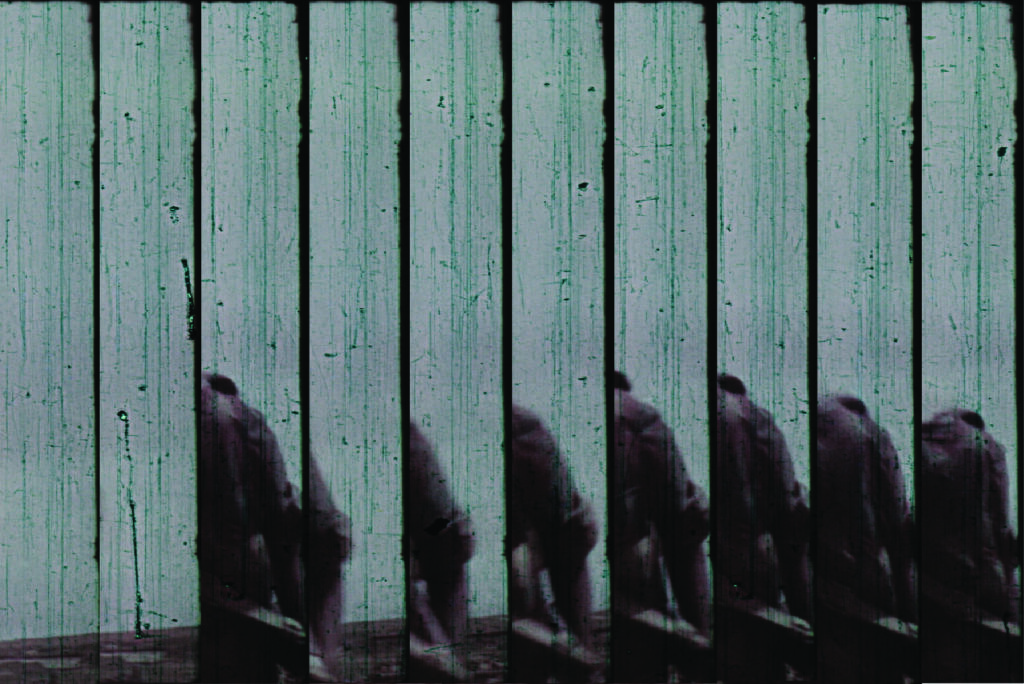
What is playing but not visible in On ‘Sexy Magico’ are ten scenes from Sexy Magico, a 1963 Italian film that can be situated within Mondo cinema, a genre occupying a contested position in between documentary film and exploitation cinema — or rather: a genre performing documentary authority while staging spectacle. Relying on shock, taboo and nudity, the films extracted African cultural practices and distorted them for Western audiences. Sexy Magico openly markets its own exploitative appeal through the slogan “Shocking taboos… a film that will quicken the pulse and delight the senses!”. The question that follows is unavoidable: who was meant to be entertained and shocked by these images, and under what conditions?
Rather than attempting a critical reinterpretation or reframing, Gahide questions whether he has the right to intervene in this material at all. The intended audience of Mondo cinema is one to which Gahide, as a white Western man, could belong, and is therefore implicated in. From within this position, the installation turns back on itself, asking who is allowed to watch, speak, and represent.
To intervene in the footage would be to claim ownership over it; to show it again would be to participate in the same cycle of extraction and appropriation that produced it. So ultimately, Gahide chose not to show the film at all, a gesture raising broader questions about found footage as a political practice. The screens turned away are not an attempt to erase the colonial images but rather an attempt to disrupt their consumption. Absence here becomes presence — a space in which responsibility is made visible. On ‘Sexy Magico’ does not offer a moral resolution, instead unfolding as a starting point, a question passed forward.