-
À la loupe
Werner Moron
7 Rue de l'Official
-
Cloakroom
Charlotte Delval
37 Rue Souverain Pont
-
Biospheric City
Xavier Mary
25 Rue Saint Paul
-
This Is Not a Theory
Giuseppe Arnone
40 Rue Hors-Château
-
Barbaro after the hunt
Andréa Le Guellec
56 Rue Saint-Gilles
-
Nos lieux de bonheur
Benjamin Hollebeke
141 Féronstrée
-
Between Two
Adrien Milon
31b Rue de la Cathédrale
-
Your Parcel Is Coming
Aurelien Lacroix
5 Rue Saint-Michel
-
Marcher, cueillir, jardiner, teindre
Benjamin Huynh
32 Rue de la Madeleine
-
À nos jours heureux
DIAAAne (Diane Stordiau)
28 - 30 Boulevard d'Avroy
-
One Loft Race — Pigeon Paradise
Lucas Castel
20 Rue de la Sirène
-
Les envahisseurs
Dimitri Autin
85 Rue de la Cathédrale
-
Vous êtes toustes flou·e·s
Marcelle Germaine
107 - 109 Rue de la Cathédrale
-
Le jeu d’un destin
Mikaïl Koçak
52 En Neuvice
-
Rue Monrose, 62 : La chambre L’enfant Le train
Paul Gérard
180 Rue Saint-Gilles
-
Peek
Raphaël Meng WU
75 Rue Hors-Château
-
Un buisson de clés (Sleutelbos)
Amber Roucourt
16 Rue du Palais
-
Brownfields
Cesare Botti
108 Féronstrée
-
Never Finished
Dirk Bours
84 Féronstrée
-
Empty Reflections
Jason Slabbynck
21 Pont d'Île
-
On « Sexy Magico »
Louis Gahide
7 Rue Lambert Lombard
-
Opalima Kupina: Liège episode A Stop Pavilion: On the Soft Underbelly of Europe.
Nikolay Karabinovych
1 Féronstrée
-
Untitled
Reza Kianpour
14 Rue de la Populaire
-
Angle Mort
VIVONS CACHÉ·ES
31a Rue de la Cathédrale
-
Haya al salat, haya ala falah*
Sarah Van Melick
4 Rue de la Cathédrale
Warning: Undefined array key "current_expo" in /var/www/clients/client3/web4/web/wp-content/themes/artaucentre/loop/vitrine.php on line 25
Brownfields
#18
Cesare Botti
420108 Féronstrée
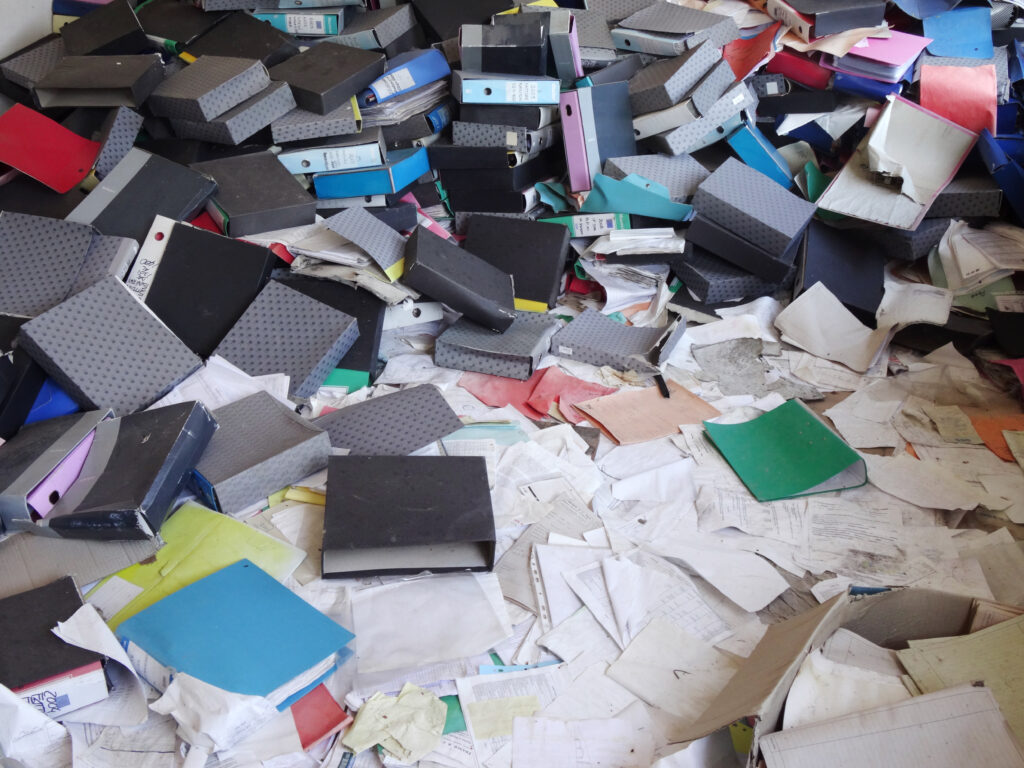
Brownfields extends Cesare Botti’s ongoing investigation into the hidden infrastructures that shape the built environment. During his explorations in abandoned and demolished industrial buildings, construction sites, and infrastructural spaces, the artist collects discarded technical drawings, bureaucratic spreadsheets and construction plans. These papers, normally invisible to the public, precisely describe every aspect of the built environment, even before it comes to existence. Engaging with these fragments of reality allows the artist to access subjects like railway networks, production plants or electrical systems, structures of a scale otherwise inaccessible to individual experience.
Through oil treatment and perforation with office tools, these papers are rendered transparent and porous, and layered in order to make their marks blend and resonate. Disconnected from the original destination, their information overlaps and erodes, turning executive plans into drifting terrains. Detached from their original function, they are reclaimed as cultural objects, markers of a broader logic of planning, accumulation and obsolescence.
Installed in a shopfront vitrine and displayed using the visual grammar of real estate windows, the work stages a reversal: documents from behind the scenes are placed at the front, infrastructure becomes façade. By dissolving function into ornament, the work questions what’s the relation between the language used for planning and the material world that it produces, and what remains of those signs once the described systems have disappeared, highlighting the tension between construction and erosion, progress and ruin.