Warning: Undefined array key "current_expo" in /var/www/clients/client3/web4/web/wp-content/themes/artaucentre/loop/vitrine.php on line 25
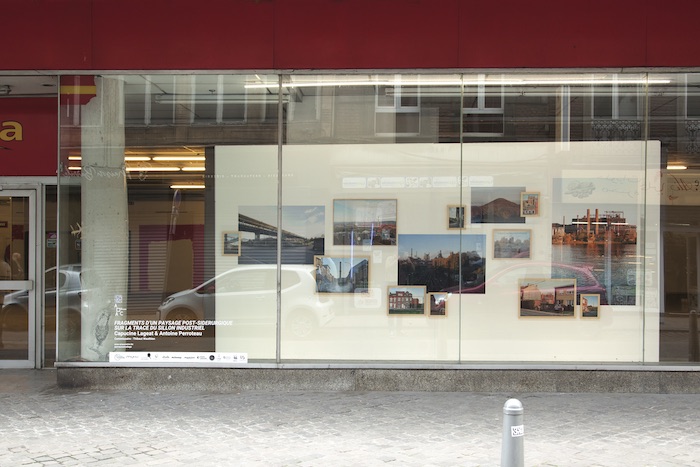
FRAGMENTS D’UN PAYSAGE POST-SIDERURGIQUE
#4
Capucine Lageat and Antoine Perroteau
Curator : Thibaut Wauthion
8054 En Féronstrée
Capucine Lageat and Antoine Perroteau propose a look at the abandoned and forgotten industrial vestiges that largely embellish Liege landscape. This artist duo strolled about the working-class neighborhoods of the region to observe them and capture images of them. These images show streets and houses with a background industrial ruin that generally represents “a high artificial landmark similar to a church tower” the duo adds. A patrimonial, social and political interest underlies this approach.
Despite the absence of a human figure in this work, the sociological dimension is tackled by a prospective and historical questioning. The extinction of the factories led to a significant unemployment and a loss of identity. The photographs of the artists show streets that are almost stuck in time without explaining how their inhabitants evolve in our society.
Furthermore, the presence of the industrial ruins on the pictures leads to question this urban logic turned towards the past. The obsolescence of factories and other industrial places questions the construction of cities around these areas emptied of any activity. The helplessness of the authorities to imagine a future for these vestiges is highlighted in substance in this work.
The two artists highlight this inaction while suggesting the point of view of the pedestrian. The stroll and the drift are very important in their work. These two aspects add a « situationist » dimension with the idea of the walk that could structure the neighborhoods and the cities. The design of these spheres based on the movement, and not the environment nor an ephemeral workplace, opens up new prospects.
