Warning: Undefined array key "current_expo" in /var/www/clients/client3/web4/web/wp-content/themes/artaucentre/loop/vitrine.php on line 25
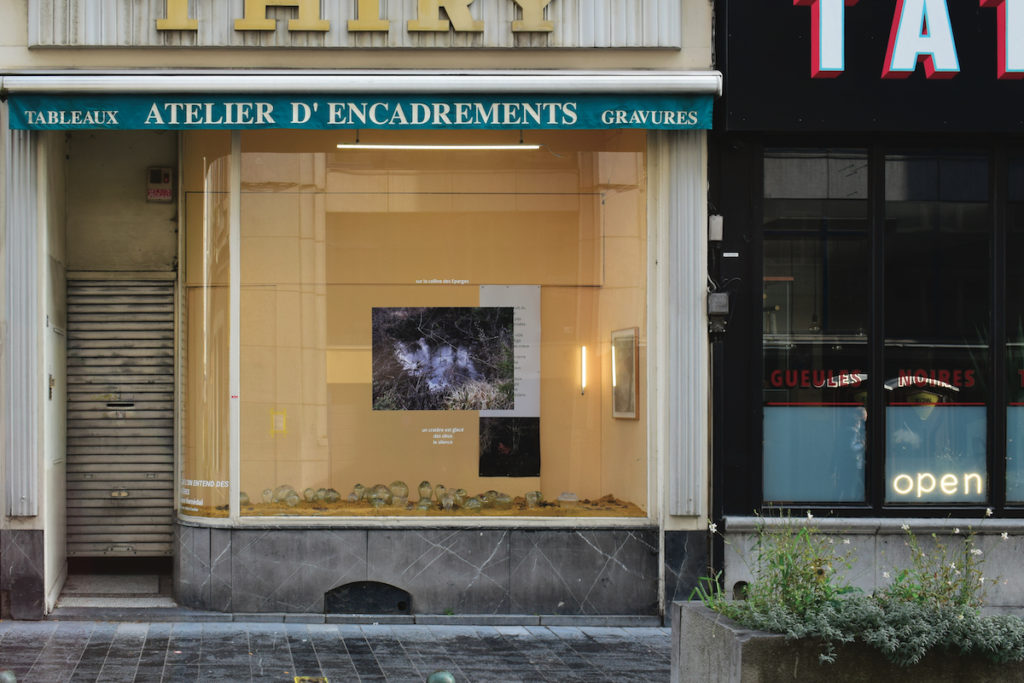
CE QUE L’ON ENTEND DES CRATÈRES
#7
Maxime Vernédal
Curator : Arthur Cordier
17129 Rue de l'Université
Maxime Vernédal is a French artist based in Brussels. He holds a Master’s Degree in Urban Space (ENSAV La Cambre). Maxime Vernédal’s practice is multidisciplinary.
The selection of the material is the start of his approach : it is the first interpretation level of his expression. The clay, glass, sound material, written material, pictures, memories are objects that he presents as a constellation.
As he was adopted, the notions of places, origins and identity are the starting point of his thoughts. This latitude of thoughts is always in motion between construction and deconstruction. In Ce que l’on entend des cratères, the approach of using the clay of Verdun battlefields goes into this perpetual movement of construction and deconstruction. It is the basis of this desire of legitimation, of belonging to this land, the land of his childhood, one of the constructions of his identity. This land has a dual use and a dual language : it is also tinged with a more global story. This tension between his story and our story is deliberate. In his approach, glass is a flash of energy and also a craft industry anchored in French Great East region.
The clash of these two materials – clay and glass – is described in breath, in high intensity of heat, and in a limited time. The printing, made with acetone and then goffered, is a reflection on destroying to rebuild. The artwork talks about palimpsest, memory and occasionally erroneous perceptions of past elements. It is a short story about an interpretation mistake by the artist. It yet led to this whole approach around clay and its asperities (scars, craters).

