Warning: Undefined array key "current_expo" in /var/www/clients/client3/web4/web/wp-content/themes/artaucentre/loop/vitrine.php on line 25
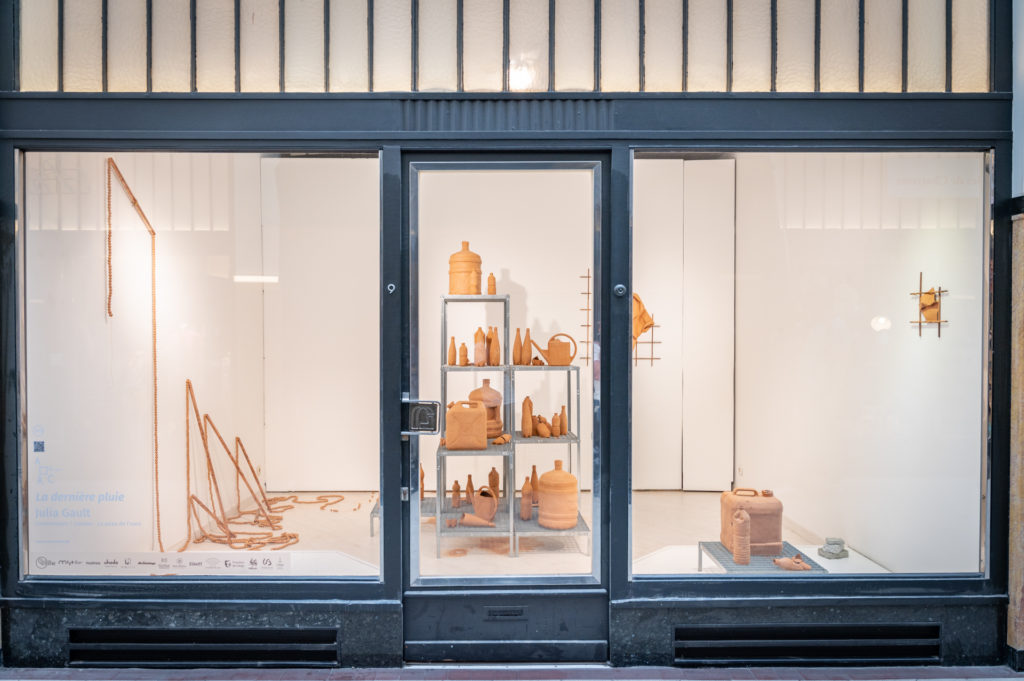
La dernière pluie
#9
Julia Gault
Curator: La peau de l’ours
2099 Passage Lemonnier
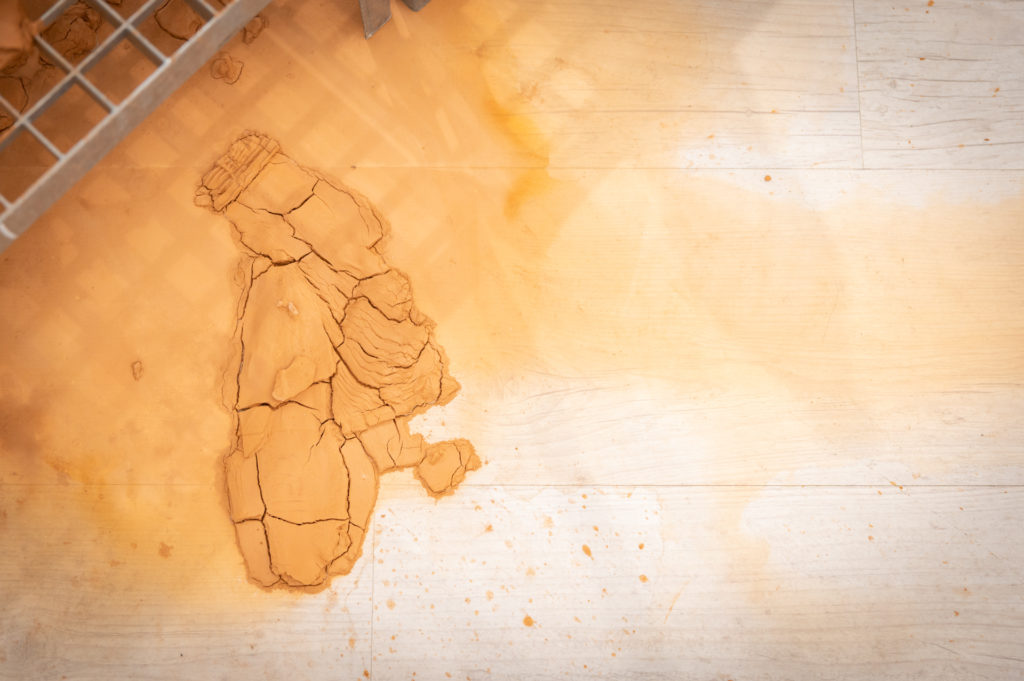
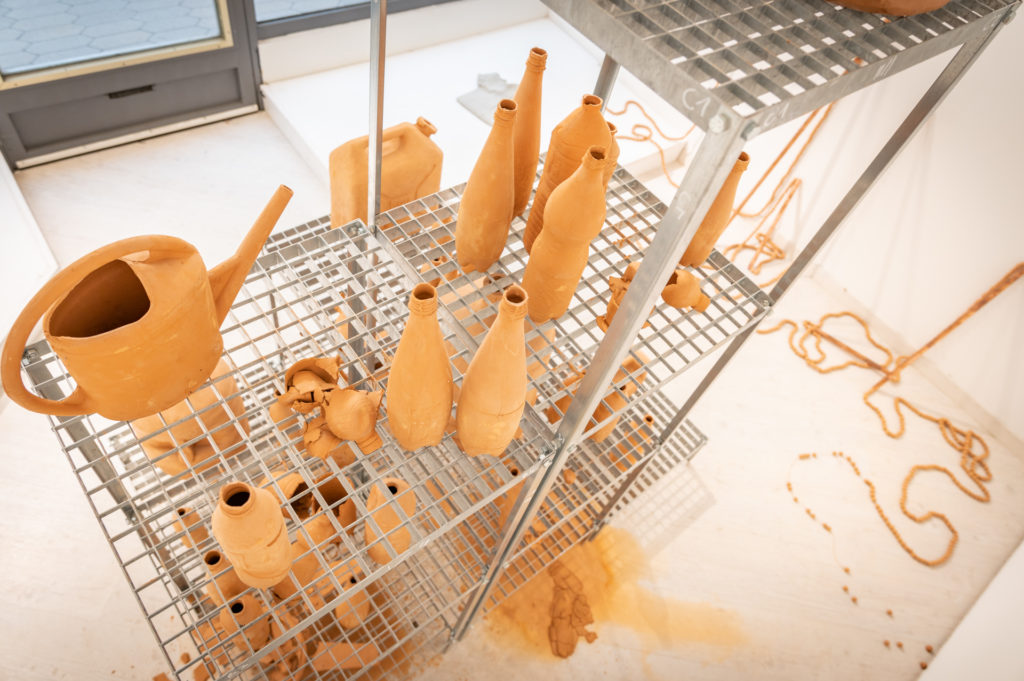
Julia Gault’s work often confronts the ephemeral shaping of natural materials with the coldness and inertia of metallic structures. Malleability and change face immobility. This dichotomy gives the impression of contemplating our societies that are blindly frozen and facing multiple disruptions that are supposed to lead to some changes in the absence of a real upheaval. The topic of water and its unpredictable impact on the soil – and the Earth – is omnipresent in Julia Gault’s work. The notions of territory, habitat, resilience and collapse are tackled in turns in this subtly political approach.
In her work, the soil becomes the constructive and narrative element while water is the activating element. The soil sometimes refers to nature, sometimes to a thousand-year-old tradition of construction or anthropic creation, and symbolizes the indestructible connection between civilization and its natural environment, while water is integrated into this work for its fluidizing attributes.
The unthinkable theory of a mortal civilization finds a poetic echo in Julia Gault’s sculptures and installations. Her artwork materializes the unbearable fragility of our daily life to shake the foundations on which our societies and our lives rest. The instability that we do not want to perceive manifests itself in the passing of time, climate changes and the tendency to always build higher, bigger and simply more. Julia Gault borrows from the image of the idol with feet of clay to highlight this human impotence facing its illusory control of nature.