-
À la loupe
Werner Moron
7 Rue de l'Official
-
Cloakroom
Charlotte Delval
37 Rue Souverain Pont
-
Biospheric City
Xavier Mary
25 Rue Saint Paul
-
This Is Not a Theory
Giuseppe Arnone
40 Rue Hors-Château
-
Barbaro after the hunt
Andréa Le Guellec
56 Rue Saint-Gilles
-
Nos lieux de bonheur
Benjamin Hollebeke
141 Féronstrée
-
Between Two
Adrien Milon
31b Rue de la Cathédrale
-
Your Parcel Is Coming
Aurelien Lacroix
5 Rue Saint-Michel
-
Marcher, cueillir, jardiner, teindre
Benjamin Huynh
32 Rue de la Madeleine
-
À nos jours heureux
DIAAAne (Diane Stordiau)
28 - 30 Boulevard d'Avroy
-
One Loft Race — Pigeon Paradise
Lucas Castel
20 Rue de la Sirène
-
Les envahisseurs
Dimitri Autin
85 Rue de la Cathédrale
-
Vous êtes toustes flou·e·s
Marcelle Germaine
107 - 109 Rue de la Cathédrale
-
Le jeu d’un destin
Mikaïl Koçak
52 En Neuvice
-
Rue Monrose, 62 : La chambre L’enfant Le train
Paul Gérard
180 Rue Saint-Gilles
-
Peek
Raphaël Meng WU
75 Rue Hors-Château
-
Un buisson de clés (Sleutelbos)
Amber Roucourt
16 Rue du Palais
-
Brownfields
Cesare Botti
108 Féronstrée
-
Never Finished
Dirk Bours
84 Féronstrée
-
Empty Reflections
Jason Slabbynck
21 Pont d'Île
-
On « Sexy Magico »
Louis Gahide
7 Rue Lambert Lombard
-
Opalima Kupina: Liège episode A Stop Pavilion: On the Soft Underbelly of Europe.
Nikolay Karabinovych
1 Féronstrée
-
Untitled
Reza Kianpour
14 Rue de la Populaire
-
Angle Mort
VIVONS CACHÉ·ES
31a Rue de la Cathédrale
-
Haya al salat, haya ala falah*
Sarah Van Melick
4 Rue de la Cathédrale
Warning: Undefined array key "current_expo" in /var/www/clients/client3/web4/web/wp-content/themes/artaucentre/loop/vitrine.php on line 25
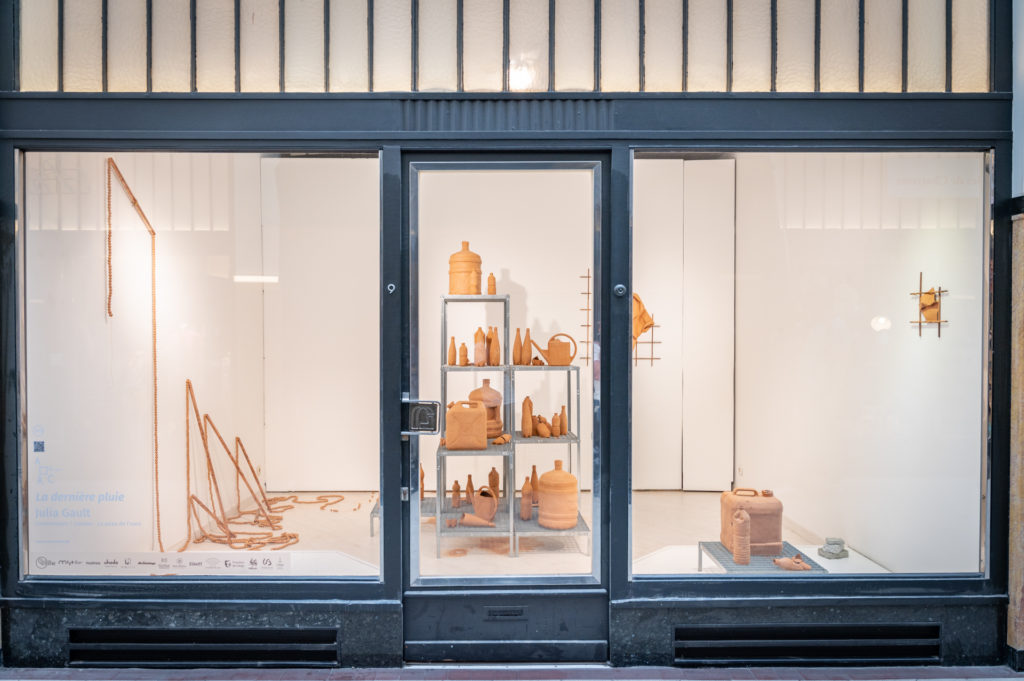
La dernière pluie
#9
Julia Gault
Curator: La peau de l’ours
2099 Passage Lemonnier
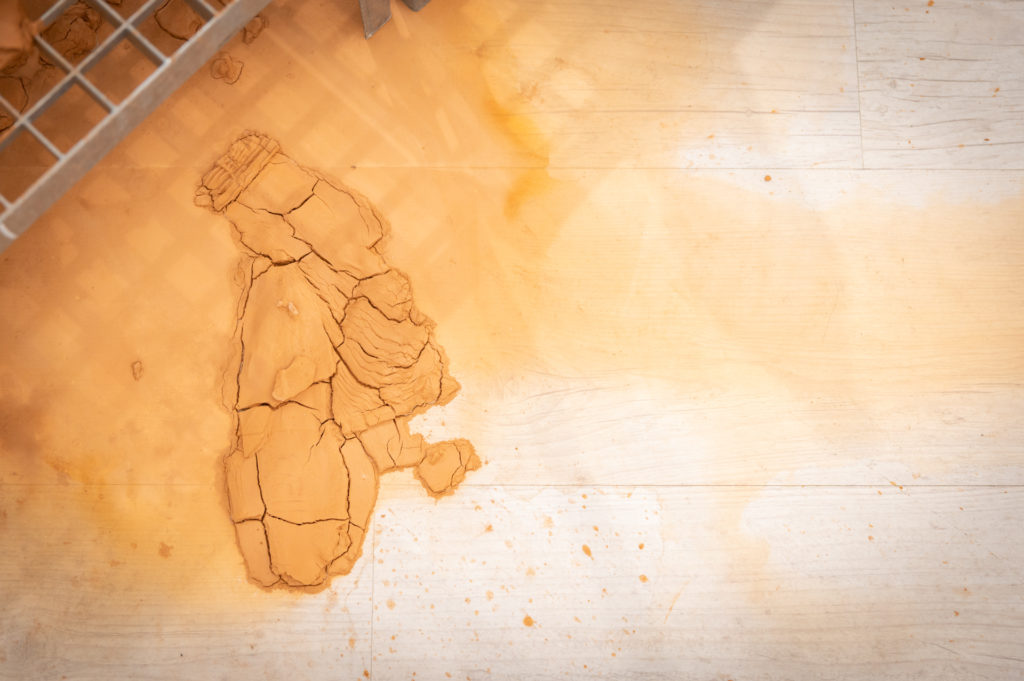
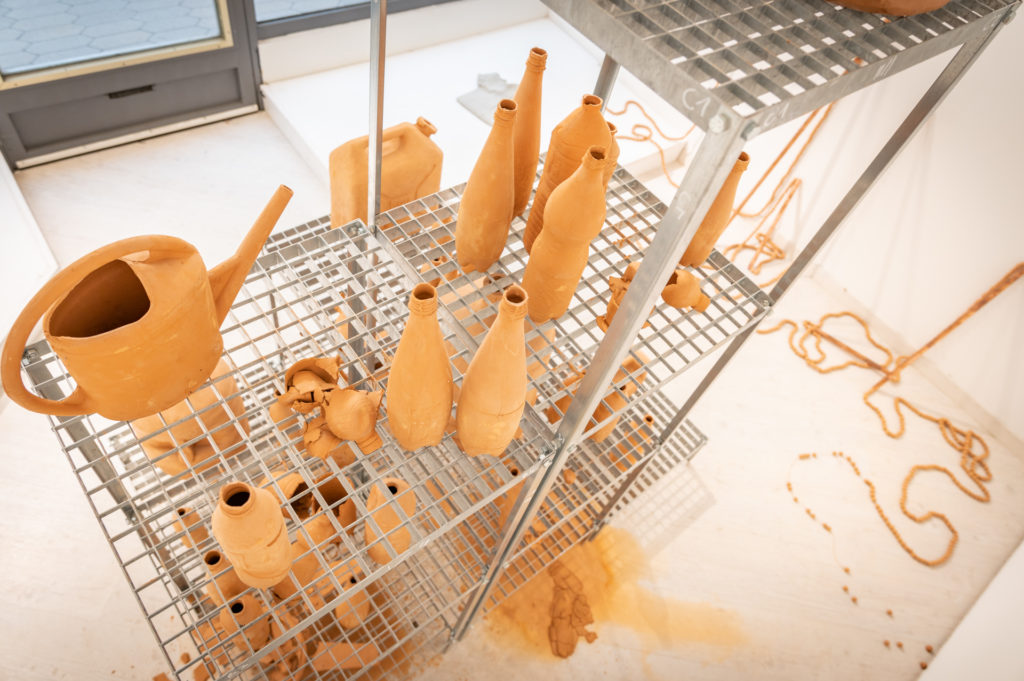
Julia Gault’s work often confronts the ephemeral shaping of natural materials with the coldness and inertia of metallic structures. Malleability and change face immobility. This dichotomy gives the impression of contemplating our societies that are blindly frozen and facing multiple disruptions that are supposed to lead to some changes in the absence of a real upheaval. The topic of water and its unpredictable impact on the soil – and the Earth – is omnipresent in Julia Gault’s work. The notions of territory, habitat, resilience and collapse are tackled in turns in this subtly political approach.
In her work, the soil becomes the constructive and narrative element while water is the activating element. The soil sometimes refers to nature, sometimes to a thousand-year-old tradition of construction or anthropic creation, and symbolizes the indestructible connection between civilization and its natural environment, while water is integrated into this work for its fluidizing attributes.
The unthinkable theory of a mortal civilization finds a poetic echo in Julia Gault’s sculptures and installations. Her artwork materializes the unbearable fragility of our daily life to shake the foundations on which our societies and our lives rest. The instability that we do not want to perceive manifests itself in the passing of time, climate changes and the tendency to always build higher, bigger and simply more. Julia Gault borrows from the image of the idol with feet of clay to highlight this human impotence facing its illusory control of nature.